İZNIK
(now Turkey, northwestern Anatolia)
15th century Production of red-bodied pottery (stoneware) called Miletus ware (from frequent discoveries around the ancient Miletus)
from the late 15th century Production of white-bodied pottery
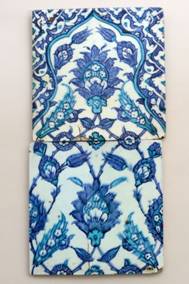
1460–1530 Blue-and-white style inspired by Chinese porcelain The combination of Ottoman (arabesque) and Chinese (floral) designs applied in this period is called rumi-hatayi
Early 16th century Start of tile production
1535–1560 The colour palette expands to include olive green, sage green, and purple. Pomegranate and saz leaf motifs appear in the designs.
1561–1563 Construction of Rüstem Pasha Mosque with interiors richly decorated with ceramic tiles
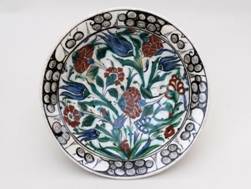
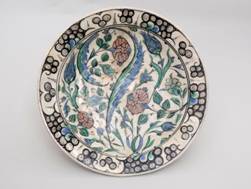
1560–1650 Quatre fleurs style with tulips, carnations, roses, and hyacinths. The edges are decorated with rock and wave motifs. Use of bright tomato red and emerald green colours. The style was originally called “Rhodian” (because it had been found on the island of Rhodes)
Late 16th/early 17th century Frequent use of figurative motifs or architecture in designs
Late 17th century Production gradually comes to a halt
Early 18th century İznik artisans move to workshops at Tekfur Sarayi, Istanbul (JMl)